
By David Gans · May 6, 2026

Why comparing vitamin brands matters after bariatric surgery
Grabbing the cheapest multivitamin off the shelf and hoping for the best is one of the most common mistakes bariatric patients make in the first year after surgery. Standard multivitamins fail to prevent deficiencies in bariatric surgery patients, yet the supplement aisle offers hundreds of options with bold claims and colorful packaging. With over 256,000 Americans undergoing bariatric procedures each year, the confusion around brand selection is real. This guide cuts through the noise with practical, ASMBS-aligned guidance so you can compare vitamin brands with confidence and protect your long-term health.
Table of Contents
- Why not all vitamin brands are equal for bariatric patients
- The science: Key nutrients you must check in any brand
- Third-party testing and label accuracy: What most people miss
- How to compare brands: Practical steps for safer supplement choices
- What most guides miss about comparing vitamin brands after surgery
- Ready to compare top bariatric vitamin brands?
- Frequently asked questions
Key Takeaways
| Point | Details |
|---|---|
| Choose bariatric-specific brands | Only bariatric-formulated vitamins meet the higher nutrient doses you need after surgery. |
| Check for third-party testing | Seals like USP, NSF, or cGMP guarantee ingredient accuracy and safety. |
| Read labels for ASMBS guidelines | Compare each product’s nutrient amounts against ASMBS-recommended daily levels. |
| Prioritize professional guidance | Rely on your care team for advice as your needs can change over time. |
Why not all vitamin brands are equal for bariatric patients
With the risks and confusion established, let’s clarify why the choice of vitamin brand is more than a matter of preference for bariatric patients.
After gastric bypass or sleeve gastrectomy, your digestive system is fundamentally altered. The stomach pouch is smaller, portions of the small intestine are rerouted or bypassed, and the production of stomach acid drops significantly. These changes affect how efficiently your body absorbs fat-soluble vitamins, minerals, and B vitamins. A standard multivitamin designed for a person with normal digestion simply cannot compensate for those losses.
Standard multivitamins often underdose the nutrients needed after bariatric surgery. For example, a typical over-the-counter multivitamin may contain 18 mg of iron. The ASMBS recommends gastric bypass patients take between 45 and 60 mg of elemental iron per day. That gap is not trivial. Over months, it translates directly into iron-deficiency anemia, fatigue, and poor recovery.
“Bariatric patients face unique physiological challenges that make standard supplementation inadequate. Surgery-specific formulas address the real absorption deficits that occur after procedures like Roux-en-Y gastric bypass and sleeve gastrectomy.” This reflects consensus from ASMBS nutritional guidelines
Here is why generic and even prenatal vitamins fall short for bariatric vitamin deficiencies:
- Iron: Bypassing the duodenum (the primary iron absorption site in RYGB) dramatically reduces uptake. You need higher doses and often a form like ferrous sulfate or ferric bisglycinate.
- Vitamin B12: Reduced intrinsic factor production after gastric bypass impairs B12 absorption from food and standard tablets. Sublingual or liquid forms bypass this issue.
- Thiamine (B1): Vomiting and reduced food intake post-op deplete thiamine rapidly. Most standard vitamins contain only 1.1 mg. Bariatric formulas often provide 12 to 50 mg.
- Vitamin D: Fat malabsorption reduces absorption of all fat-soluble vitamins, including vitamin D3. ASMBS recommends 3,000 IU daily at minimum, while standard multivitamins typically contain 400 to 800 IU.
- Zinc: Gastric bypass reduces zinc absorption by up to 50%. Standard multivitamins rarely provide enough to offset this.
Surgery type also matters significantly. Gastric bypass patients face greater iron and B12 risk due to anatomical changes. Sleeve patients may have lower iron risk but still need higher vitamin D and thiamine. Understanding gastric bypass vitamin needs before you buy makes a measurable difference in preventing deficiency.
The science: Key nutrients you must check in any brand
Now that we’ve established standard vitamins aren’t enough, it’s important to know exactly what nutrients to look for and why dosage matters.
Reading a supplement label sounds straightforward, but most people overlook critical details. The serving size might be two or four tablets, not one. The percentages listed as Daily Value are calculated for the general population, not bariatric patients. Here is a comparison of what you actually need versus what you typically find.
| Nutrient | ASMBS recommended (post-op) | Standard multivitamin | Bariatric-specific formula |
|---|---|---|---|
| Iron | 45–60 mg/day | 18 mg | 45–60 mg |
| Vitamin B12 | 350–500 mcg/day | 6 mcg | 350–1,000 mcg |
| Vitamin D3 | 3,000 IU/day minimum | 400–800 IU | 3,000–5,000 IU |
| Thiamine (B1) | 12 mg/day minimum | 1.1–1.5 mg | 12–50 mg |
| Calcium citrate | 1,200–1,500 mg/day | 200–500 mg | 500 mg per serving (split doses) |
| Zinc | 8–22 mg/day | 8–11 mg | 15–22 mg |
| Vitamin A | 5,000–10,000 IU/day | 750–2,500 IU | 5,000–10,000 IU |
A real-world example worth knowing: Flintstones Complete, sometimes recommended informally by older clinical teams, contains only 6 mcg of B12, 18 mg of iron, and 600 IU of vitamin D. It might prevent scurvy. It will not prevent the bariatric-specific nutrient gaps that develop over months and years post-op.
Bariatric patients require much higher amounts of iron, B12, vitamin D, thiamine, and fat-soluble vitamins than standard supplements provide. Fat-soluble vitamins like A, D, E, and K need dietary fat for absorption. After surgery, fat digestion is impaired, so even if a vitamin contains adequate amounts, your body may only absorb a fraction of what the label claims.
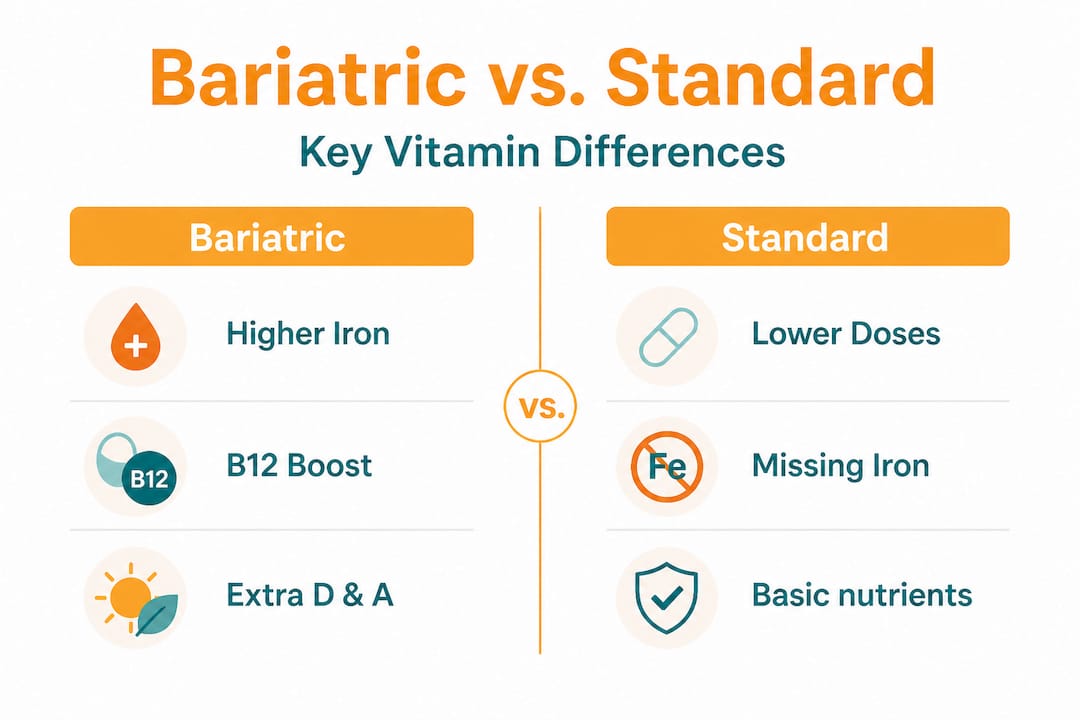
Pro Tip: Always check the “per serving” amount on the supplement facts panel, not just per tablet. Many bariatric vitamins require two to four tablets daily to hit the therapeutic dose. A product that looks affordable per bottle may cost more per actual serving day.
Third-party testing and label accuracy: What most people miss
Even after finding the right nutrients, content accuracy isn’t guaranteed. This is where label checking and third-party quality seals matter most.
The supplement industry in the United States operates differently from pharmaceuticals. The FDA does not review or approve supplements before they go to market. Manufacturers are responsible for their own safety and label accuracy. The result is a market where product quality varies widely.

Supplements are not FDA-regulated for content accuracy, and roughly 20 to 25% of supplements fail independent tests. That means a product claiming to contain 45 mg of iron per serving might actually contain 28 mg, or contain harmful contaminants not listed on the label.
Third-party certifications exist to solve this problem. Here is what to look for.
| Certification | What it verifies | Symbol location |
|---|---|---|
| USP Verified | Ingredients match label; no harmful contaminants | USP seal on front or back label |
| NSF International | Label accuracy, contaminant testing, cGMP compliance | NSF or NSF Certified for Sport seal |
| cGMP compliance | Follows current Good Manufacturing Practices set by FDA | Often “GMP Certified” text on label |
| Informed Sport | Tested for banned substances; relevant for athletes | Informed Sport shield |
Here is how to verify a supplement’s legitimacy before buying:
- Check the label first. Look for a USP, NSF, or cGMP seal. These should be present, not just mentioned in marketing copy on the website.
- Search the certifying organization’s database. NSF and USP maintain searchable databases of certified products at their official websites. Cross-reference the product before purchasing.
- Review the Certificate of Analysis (COA). Reputable brands make third-party COAs available on request or on their website. It shows the actual tested amounts of key nutrients.
- Look at the manufacturing location. US-based cGMP-certified facilities are subject to more consistent oversight than overseas manufacturers.
- Check for recent complaints. The FDA’s MedWatch database and consumer forums for bariatric patients can reveal patterns of adverse events linked to specific brands.
Pro Tip: Popularity and price are not reliable proxies for quality. A best-selling vitamin on Amazon with thousands of reviews may not carry a single third-party certification. Conversely, some of the best-tested bariatric formulas are mid-priced and not heavily marketed. Always compare calcium supplements and other nutrients using verified data, not star ratings alone.
How to compare brands: Practical steps for safer supplement choices
Armed with knowledge about nutrients and certification, you’re ready to approach brand comparison with confidence.
This is where most bariatric patients get stuck. They know they need a bariatric vitamin. They have three or four brands in front of them. They don’t know how to evaluate them side by side. Here is a practical process.
- Start with your surgery type. RYGB patients generally need higher iron and B12 than sleeve patients. Mini-bypass needs fall somewhere in between. Your procedure dictates your baseline requirements before you even look at labels.
- Pull the supplement facts panel for each brand. Do not rely on the brand’s marketing summary. Go directly to the full nutrient list and serving size.
- Compare each nutrient against ASMBS minimums. Check iron, B12, vitamin D, thiamine, zinc, and the fat-soluble vitamins (A, E, K). If a brand falls significantly short on even one of these, it may require a separate supplement, which adds cost and pill burden.
- Confirm third-party certification. Apply the verification steps above. A brand without any third-party testing carries more risk, especially for long-term use.
- Consider the form. Capsules, chewables, and dissolvables absorb differently and suit different post-op stages. Chewables and liquids are often recommended in the first several weeks post-op before you can swallow capsules comfortably.
- Calculate cost per day, not cost per bottle. A 60-count bottle of a four-tablet-per-day vitamin lasts only 15 days. A 120-count bottle of a two-tablet-per-day vitamin lasts 60 days. Comparing price per bottle is misleading.
- Ask your bariatric dietitian or pharmacist. Multidisciplinary monitoring is key for ongoing vitamin needs. Your care team knows your bloodwork, your surgery details, and your personal absorption profile.
A worked example: Two brands both claim to cover iron for gastric bypass patients. Brand A provides 45 mg of elemental iron as ferrous fumarate per four-tablet serving. Brand B provides 28 mg as ferric oxide, which has significantly lower bioavailability. On paper, Brand B is cheaper. In practice, Brand A delivers meaningfully more absorbable iron and is the more sensible choice for a bypass patient.
Watch out for gummy vitamin limitations in particular. Gummies rarely contain iron (because it affects taste), and they often contain added sugars that work against your nutritional goals. They may be convenient, but they almost never meet the full nutrient requirements for post-bariatric patients. Explore more detailed bariatric vitamin guides to get surgery-specific breakdowns for each nutrient.
What most guides miss about comparing vitamin brands after surgery
Most brand comparison content focuses on what is on the label. The label matters enormously. But after going through gastric bypass myself in January 2024 and losing 231 lbs, I can tell you there is a layer of complexity that no comparison chart fully captures.
I am David Gans, and I spent months cross-referencing supplement facts panels, reading research, and getting my bloodwork checked every 90 days. What I found is that two people on the same surgery, taking the same brand, can have completely different lab results. Individual absorption varies based on gut microbiome, inflammation, protein intake, and whether you are taking medications that interfere with nutrient uptake, such as proton pump inhibitors, which are common after bariatric surgery and reduce B12 absorption further.
Dietitian and team support after surgery catch subtle deficiencies and adapt regimens as needs change. This is the part most comparison guides skip. A vitamin that worked well in months one through six may need to be adjusted at month twelve because your absorption patterns shift as your body adapts. Ferritin might be fine early on but drift down once the body catches up with your reduced iron intake. Serum 25-OH vitamin D might look acceptable in summer but drop in winter months.
The practical implication is that no single brand comparison, including the ones on this site, replaces individualized monitoring. Think of brand comparison as a starting framework, not a final answer.
How needs differ after surgery is something that evolves over years, not just months. The right vitamin brand for year one may not be the right brand for year three. Staying engaged with your bariatric team, doing your labs consistently, and revisiting your supplement stack annually is the habit that actually protects your long-term nutritional status. Winging it with the same brand forever because it worked initially is a real risk.
Ready to compare top bariatric vitamin brands?
You’ve built a solid framework for evaluating vitamin brands after bariatric surgery. Now it’s time to put that knowledge to work with trusted, side-by-side comparisons.
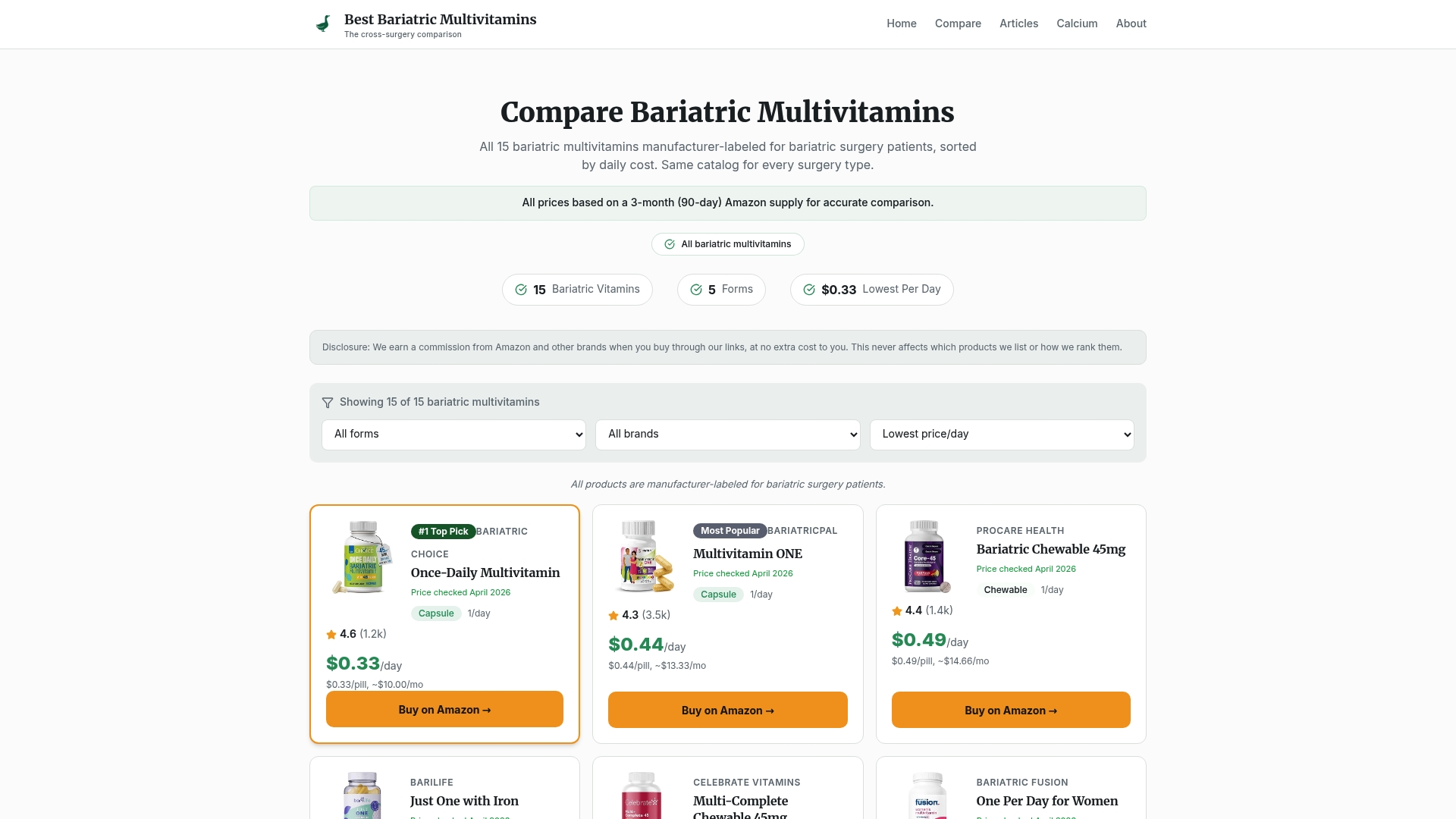
At Bestbariatricmultivitamins.com, we compare 15 manufacturer-labeled bariatric multivitamins across price per day, iron content, form, and surgery type fit. Every comparison is grounded in ASMBS guidelines and written from real patient experience. Whether you’ve had gastric bypass, sleeve gastrectomy, or mini-bypass, you’ll find clear, actionable guidance tailored to your procedure. Visit compare bariatric multivitamins to find the brand that matches your surgery, your budget, and your lab results.
Frequently asked questions
Why can’t I just use a standard multivitamin after bariatric surgery?
Standard multivitamins do not meet ASMBS guidelines for post-op care, lacking the high doses of iron, vitamin B12, D, and thiamine needed to prevent deficiency after bariatric surgery. The nutritional gaps created by surgical alteration of the digestive tract require purpose-built formulas.
How can I tell if a vitamin brand is third-party tested?
Look for seals such as USP, NSF, or cGMP on the product label, which indicate the product has passed independent quality checks for label accuracy and contaminant testing. You can also verify certification directly on the USP or NSF official websites.
Do all bariatric surgeries require the same vitamin brands?
Nutrient requirements vary by procedure and individual patient factors, so requirements differ based on surgery type. Always check with your healthcare team for personalized suggestions based on your procedure and current labs.
Can price or popularity alone guarantee vitamin quality?
No. Price and popularity are not reliable indicators of supplement quality. Always verify third-party testing certifications and compare actual nutrient levels against ASMBS recommendations before purchasing any bariatric vitamin.
Recommended
- Best Bariatric Multivitamins: Compare 15 Products by Price
- Bariatric Vitamin Guides for Bypass and Sleeve Patients
- Bariatric Vitamin Deficiencies: What to Watch For
- Best Multivitamin After Gastric Bypass Surgery (2026)
- general guidance on improving vitamin levels
- generic vitamin and mineral comparisons
Find your bariatric multivitamin
Compare 15 products by price, surgery type, and iron content.
Compare 15 multivitamins