
Recovery Guide
Hair Loss After Bariatric Surgery: Why It Happens and How to Recover

By David Gans, gastric bypass patient covering all WLS multivitamins

I am David Gans, founder of Dutch Goose. I lost 231 lbs after gastric bypass in January 2024.
At month 3 post-op, I noticed thinning when I ran my hand through my hair in the shower. My ferritin had dropped to 28 ng/mL, and that was the first time I understood that hair loss after bariatric surgery is usually not about vanity. It is often your body showing the stress of surgery, rapid weight loss, and possible nutrient gaps.
Key takeaways
Timing is predictable
WLS hair loss often starts around weeks 8-16, peaks around months 3-4, and improves by months 9-12.
Cause is usually telogen
Most bariatric hair shedding is telogen effluvium, a reversible shedding pattern triggered by stress and rapid weight loss.
Labs matter most
Protein intake, ferritin, iron status, zinc, copper, thyroid markers, and CBC can reveal common drivers.
Biotin is not magic
Biotin should not be overused unless a deficiency is confirmed, because high doses can interfere with lab testing.
| Point | Details |
|---|---|
| Timing is predictable | WLS hair loss often starts around weeks 8-16, peaks around months 3-4, and improves by months 9-12. |
| Cause is usually telogen | Most bariatric hair shedding is telogen effluvium, a reversible shedding pattern triggered by stress and rapid weight loss. |
| Labs matter most | Protein intake, ferritin, iron status, zinc, copper, thyroid markers, and CBC can reveal common drivers. |
| Biotin is not magic | Biotin should not be overused unless a deficiency is confirmed, because high doses can interfere with lab testing. |
Why hair loss happens after bariatric surgery
Hair loss after bariatric surgery usually happens because surgery and rapid weight loss push more hair follicles into the shedding phase at the same time.
The most common pattern is called telogen effluvium. In plain English, that means your body shifts more hairs than usual into the resting phase, then those hairs shed weeks later. This is why the hair loss often feels delayed. You may feel fine after surgery, then suddenly notice hair everywhere in the shower a few months later.
Telogen effluvium is well described as excessive shedding after metabolic stress, illness, surgery, hormonal shifts, or nutritional stress. NCBI Bookshelf describes it as shedding of resting hair after a trigger such as metabolic stress or medication exposure. Bariatric surgery can create several triggers at once: anesthesia, inflammation, calorie restriction, rapid weight loss, lower protein intake, and micronutrient changes. NCBI Bookshelf telogen effluvium overview
This does not mean your gastric bypass, sleeve, or mini-bypass directly attacks your hair. The anatomy matters for long-term nutrition risk, but the early shedding itself is usually a body stress response.
A 2021 dermatology case report on bariatric surgery-induced telogen effluvium describes diffuse hair loss after bariatric surgery and links the pattern to telogen effluvium rather than scarring hair loss. Bariatric surgery-induced telogen effluvium
That distinction matters. Telogen effluvium is usually reversible. Scarring alopecia is different. Scarring alopecia can permanently damage hair follicles and needs medical review. If you have patchy hair loss, scalp pain, redness, scaling, sores, or bald patches that do not look like general shedding, do not assume it is normal bariatric hair loss.
Post-bariatric patients need lifelong attention to protein intake, micronutrient supplementation, and lab monitoring because deficiencies can occur after weight loss surgery and may affect recovery.– ASMBS Nutritional Guidelines, 2017
The hard part is emotional. Even when you know it is common, it can feel awful. I had lost weight fast, felt better in my body, and then suddenly my hair looked thinner. That messes with your head.
But the practical response is not panic. The practical response is to check the basics: protein, iron, ferritin, zinc, copper, thyroid, and your full blood count.
When bariatric hair loss starts and when regrowth happens
Bariatric hair loss often starts around weeks 8-16, peaks around months 3-4, and improves by months 9-12 if the trigger settles and nutrition is corrected.
That timeline fits the biology of telogen effluvium. Hair does not fall out the same day your body experiences stress. There is a delay between the trigger and the visible shedding. That is why many people feel shocked when the hair loss starts after the hardest surgical recovery phase has already passed.
For many people, the pattern looks like this:
Typical bariatric hair loss timeline
Weeks 0-8
Your body is healing, intake is limited, and weight loss often moves fast.
Weeks 8-16
Shedding may begin, often noticed in the shower, brush, pillow, or ponytail thickness.
Months 3-4
Hair loss often peaks, especially if protein intake or iron stores are low.
Months 5-7
Shedding may slow if intake improves and labs are corrected.
Months 9-12
Many people see visible recovery, shorter regrowth hairs, and improved thickness.
My own timeline was textbook. At month 3, I noticed thinning in the shower. My ferritin had dropped to 28 ng/mL. I increased protein to around 100g per day and adjusted my iron timing so I took iron at least 2 hours away from calcium. Visible regrowth started around month 7. By month 11, my hair felt back to normal.
That does not mean everyone needs 100g protein daily forever. It means my early recovery needed a more aggressive protein routine, and my labs helped explain why my hair was struggling.
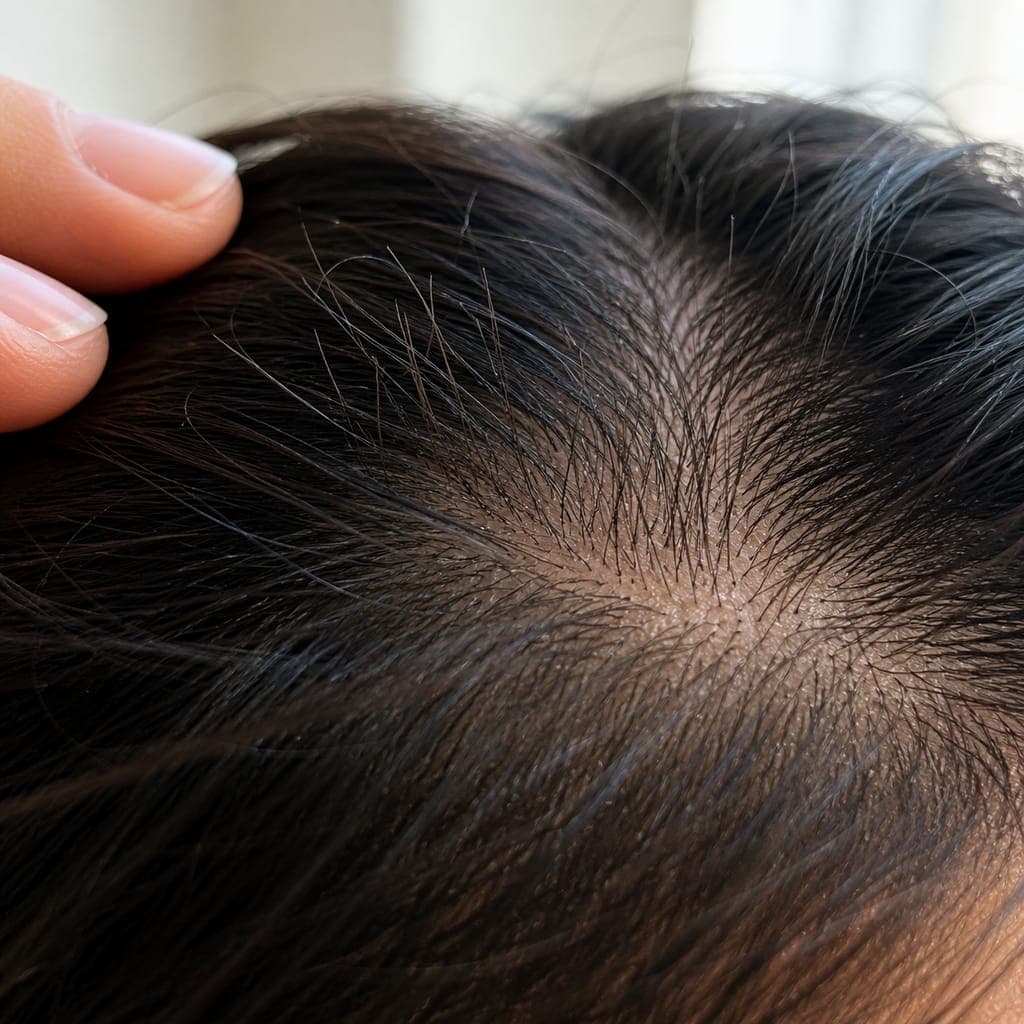
If your shedding continues past month 12, treat that as a reason to act. Do the same if hair loss comes with fatigue, brain fog, dizziness, cold intolerance, brittle nails, restless legs, or unusual weakness. Those symptoms can point toward iron deficiency, thyroid issues, low protein intake, or other gaps that need labs.
Good labs to discuss with your bariatric team include ferritin, iron panel, zinc, copper, thyroid markers, complete CBC, B12, folate, vitamin D, and albumin or prealbumin where clinically appropriate.
This is also where it helps to separate normal shedding from a true deficiency pattern. Early telogen effluvium can happen even when you do many things right. But persistent shedding, severe fatigue, or slow recovery should not be brushed off as "just bariatric hair loss."
Nutrients that matter most for bariatric hair regrowth
The three most important nutrition checks for bariatric hair regrowth are protein intake, iron status, and zinc status.
Hair is not the body's first priority after surgery. Your body will prioritize healing, organs, blood volume, and basic survival before it prioritizes hair growth. That is why low intake can show up in your hair before you feel seriously unwell.
Protein is the foundation. ASMBS patient education notes that many bariatric programs recommend 60-100 grams of protein per day, depending on the patient. ASMBS life after bariatric surgery
In real life, many people struggle to hit protein targets early after surgery. Appetite changes. Portions are tiny. Meat may feel heavy. Protein shakes can taste too sweet. Some people get nausea from dairy or water. That is why a structured protein plan matters.
If you need help comparing practical options, I would start with best protein powder after bariatric surgery. Protein powder is not mandatory forever, but it can be useful when food volume is still limited.
Iron and ferritin come next. Ferritin is your stored iron. You can have low ferritin before you have obvious anemia on a CBC. That matters because low ferritin is associated with telogen effluvium and hair shedding. One study on iron supplementation and telogen effluvium found that patients with baseline ferritin at or above 50 ng/mL reported better satisfaction than those below 50 ng/mL. Iron supplementation and ferritin in telogen effluvium
For me, ferritin was the missing clue. My ferritin was 28 ng/mL. That was not a random number on a lab sheet. It gave me a concrete target to discuss with my care team.
Zinc also matters for hair follicle health. Zinc deficiency is reported after bariatric surgery and can be more common after bypass-type procedures because of malabsorption risk. A systematic review and meta-analysis found hair loss after metabolic and bariatric surgery was associated with low serum levels of zinc, folic acid, and ferritin. Hair loss after metabolic and bariatric surgery
For a deeper explanation, read zinc deficiency after bariatric surgery. Zinc is useful, but more is not always better. Too much zinc can contribute to copper deficiency, and copper deficiency can create neurologic and blood-related problems. This is why lab-guided correction is safer than guessing.
Hair-support nutrition targets by procedure
| Nutrient | Gastric Bypass (RYGB) | Sleeve | Mini-Bypass |
|---|---|---|---|
| Protein | 80-100g/day | 60-80g/day | 80-100g/day |
| Iron | 45-60mg/day elemental | 18mg/day elemental | 45mg/day elemental |
| Zinc | 8-22mg/day | 8-11mg/day | 8-22mg/day |
| Ferritin | 50+ ng/mL | 50+ ng/mL | 50+ ng/mL |
Targets based on ASMBS clinical guidance. Always confirm with your bariatric team.
The procedure differences are not about judging one surgery as better or worse. They reflect different anatomy and absorption risk. Gastric bypass and mini-bypass usually need closer attention to iron and zinc because food bypasses parts of the upper small intestine where some nutrients are absorbed. Sleeve patients can still develop deficiencies, especially when intake is low, vomiting occurs, or supplementation is inconsistent.
A good bariatric multivitamin should be chosen by procedure, tolerance, lab history, and what your bariatric team recommends. For bypass-specific context, read best multivitamin after gastric bypass. For broader deficiency patterns, read bariatric vitamin deficiencies.

Biotin deserves its own warning. Biotin is often marketed for hair, but it is not a smart default response to bariatric hair loss. Unless a deficiency is confirmed, high-dose biotin is not usually the first thing to reach for.
Biotin can also interfere with lab tests, including thyroid tests. That matters because thyroid issues can also affect hair loss. If you take high-dose biotin before thyroid labs, the results may be misleading. A peer-reviewed review describes how biotin can create misleading thyroid assay results. Biotin and thyroid test interference
That is the frustrating part. Someone starts biotin for hair loss, then later needs thyroid labs because hair loss continues, and the supplement may muddy the results. Tell your clinician and lab if you take biotin.
What to avoid when WLS hair loss starts
The biggest mistake with WLS hair loss is throwing random supplements at the problem before checking protein intake and labs.
I get the panic. When hair starts coming out in handfuls, you want to fix it today. But hair biology moves slowly. A supplement you start today will not create visible thickness tomorrow. The goal is to remove the trigger, correct deficiencies, and give the hair cycle time to reset.
Common mistakes include:
- Starting high-dose biotin without labs.
- Using gummy vitamins as your main bariatric multivitamin.
- Taking iron and calcium together every day.
- Ignoring ferritin because hemoglobin looks normal.
- Under-eating protein while focusing only on capsules.
- Heat styling fragile hair during peak shedding.
- Waiting past month 12 without asking for a lab review.
Gummy vitamins deserve extra caution. They may taste easier, but they are often not built as complete primary supplementation after bariatric surgery. For more context, read gummy vitamins after bariatric surgery. This does not mean every gummy product is evil. It means gummies should not replace a procedure-appropriate bariatric vitamin routine unless your bariatric team specifically approves it.
Gentle hair care helps, but it is support, not the main treatment. Use a wide-tooth comb. Avoid tight ponytails. Lower heat styling. Do not bleach or chemically treat hair during the worst shedding window if you can avoid it. Scalp massage may help you feel more proactive and may support scalp comfort, but it will not correct low ferritin or low protein.
The most important mindset shift is this: bariatric hair regrowth is usually a months-long correction process. You are not trying to "hack" hair growth. You are trying to make your body feel safe enough to grow hair again.
Find the right hair loss recovery routine
The right recovery routine for hair loss after bariatric surgery starts with protein consistency, lab review, procedure-appropriate vitamins, and gentle hair handling.
Built for the 256,000+ Americans who have bariatric surgery each year, this site compares bariatric multivitamins from a practical patient perspective. I look at labels, dosing structure, procedure fit, and how a routine works in real life. Prices based on a 3-month (90-day) supply.
Use this simple recovery framework:
Hair loss recovery checklist
Track protein for 7 days
Do not guess. Write down your actual grams and compare them with your program's target.
Review your vitamin routine
Check whether your multivitamin is labeled by the manufacturer for bariatric patients and matches your surgery type.
Separate iron and calcium
Keep at least 2 hours between them unless your clinician gives different instructions.
Ask for targeted labs
Discuss ferritin, iron panel, zinc, copper, thyroid markers, B12, folate, vitamin D, and CBC.
Protect fragile hair
Reduce heat, chemical treatments, tight hairstyles, and aggressive brushing during peak shedding.
Reassess by month 12
If shedding continues or symptoms appear, ask for a medical review rather than waiting longer.
If you are still building your routine, start with the bariatric multivitamin comparison tool. It lets you compare options by surgery type, label details, dose structure, and 90-day supply pricing.
If your hair loss started after bypass, also read best multivitamin after gastric bypass. If your main struggle is hitting protein, read best protein powder after bariatric surgery. If labs show low zinc, read zinc deficiency after bariatric surgery.
Do not treat hair loss as proof that you failed. Telogen effluvium after bariatric surgery is common, scary, and often reversible. But do take it seriously enough to check the basics. Hair can be the first visible sign that your nutrition plan needs tightening.
Frequently Asked Questions
Is hair loss after bariatric surgery permanent?
Hair loss after bariatric surgery is usually not permanent when it is telogen effluvium. This type of shedding is typically reversible once surgical stress settles and nutrition gaps are corrected, but patchy loss, scalp inflammation, or shedding past month 12 should be reviewed medically.
When does gastric bypass hair loss usually stop?
Gastric bypass hair loss often peaks around months 3-4 and improves between months 6-12. If ferritin, protein intake, zinc, or thyroid markers are off, recovery may take longer until those issues are addressed.
Does sleeve hair loss happen even without malabsorption?
Yes, sleeve hair loss can happen even though sleeve surgery is less malabsorptive than bypass. Rapid weight loss, low intake, surgical stress, vomiting, low protein, and nutrient gaps can still trigger telogen effluvium.
Should I take biotin for bariatric hair regrowth?
Biotin is not the first supplement I would add unless deficiency is confirmed. High-dose biotin can interfere with thyroid and other lab tests, so tell your clinician if you are taking it.
What labs should I ask for if WLS hair loss continues?
Ask your bariatric team about ferritin, iron panel, zinc, copper, thyroid markers, complete CBC, B12, folate, vitamin D, and protein markers where appropriate. This is especially important if hair loss continues past month 12 or comes with fatigue, brain fog, dizziness, or weakness.
Related Articles
Bariatric Vitamin Deficiencies
The full list of deficiencies bariatric patients watch for.
Read →Best Protein Powder After Bariatric Surgery
How to choose a bariatric-friendly protein powder using label numbers.
Read →Zinc Deficiency After Bariatric Surgery
Zinc deficiency affects up to 40% after bypass. Learn symptoms and prevention.
Read →Best Multivitamin After Gastric Bypass
Top-ranked bypass vitamins ranked by price per day.
Read →Looking for surgery-specific guides?
This site covers every WLS patient. If you want content tuned to one surgery type, the Dutch Goose network has two dedicated sites.